
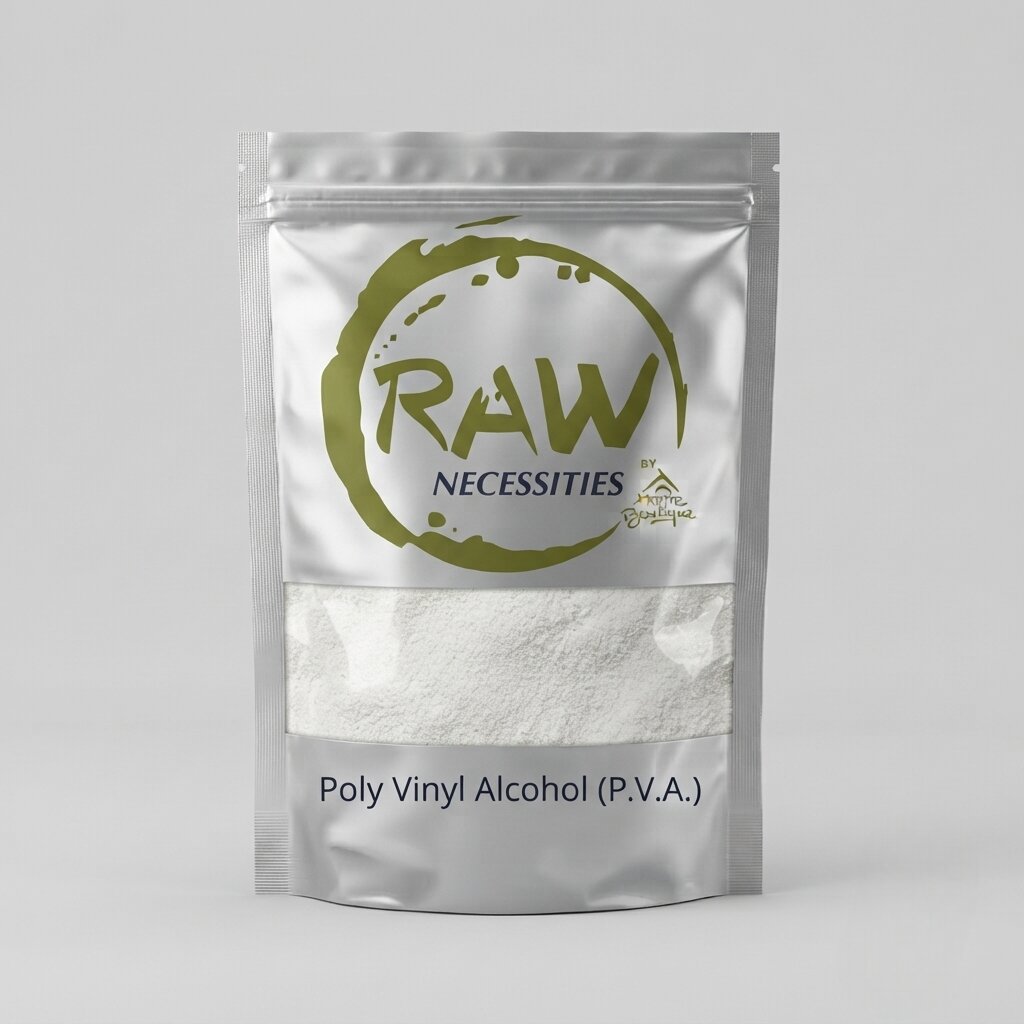
Poly Vinyl Alcohol (P.V.A) – Versatile Water-Soluble Polymer
Poly Vinyl Alcohol (P.V.A), also known as PVOH, is a synthetic polymer valued for its film-forming ability, binding properties, and compatibility with water-based systems. It is widely used as a functional raw material in manufacturing processes that require water-soluble films, adhesive solutions, protective coatings, or polymer-based formulations.
When dissolved under suitable conditions, P.V.A can form uniform polymer solutions that help provide binding strength, viscosity control, and film integrity. These properties make it useful for manufacturers, formulators, laboratories, and industrial product developers.
The performance of P.V.A depends on important grade characteristics, including molecular weight, viscosity, and degree of hydrolysis. These factors influence dissolution behaviour, film properties, and suitability for particular applications.
Whether used in adhesive production, paper coatings, textile processing, or other compatible applications, selecting the appropriate grade is essential for consistent results. Always consult the supplier’s technical data sheet for the correct processing method and application requirements.
Key Features & Benefits
-
Water-Soluble Polymer: Dissolves in water under suitable conditions, depending on grade and processing.
-
Film-Forming Properties: Can form polymer films after the water evaporates.
-
Binding Performance: Useful in selected adhesive and binding formulations.
-
Viscosity Modification: Can help adjust the viscosity of compatible aqueous solutions.
-
Coating Applications: Used in selected paper, textile, and industrial coating processes.
-
Grade Versatility: Available grades can differ in molecular weight, viscosity, and hydrolysis level.
-
Industrial Raw Material: Suitable for manufacturers, laboratories, and formulation developers.
Applications
Adhesives & Binding Agents
Used in selected water-based adhesive and binding formulations.
Used in applications requiring water-soluble or polymer-based films.
Can support film formation and surface properties in compatible coating systems.
Used in selected textile sizing and processing applications.
Other possible uses include selected laboratory applications and specialty water-based formulations. Confirm suitability for the intended use with the supplier.
Product Specifications
|
Specification |
Details |
|---|---|
|
Product Name |
Poly Vinyl Alcohol (P.V.A) |
|
Common Abbreviation |
PVA / PVOH |
|
Chemical Name |
Polyvinyl Alcohol |
|
CAS Number |
9002-89-5 |
|
Ingredient Category |
Synthetic Water-Soluble Polymer |
|
Physical Form |
Typically white to off-white powder or granules; verify grade |
|
Solubility |
Water-soluble under appropriate conditions |
|
Film-Forming Ability |
Yes, grade-dependent |
|
Molecular Weight |
Depends on grade |
|
Degree of Hydrolysis |
Depends on grade |
|
Viscosity |
Grade-specific |
|
Recommended Usage |
Based on application and supplier guidance |
|
Packaging |
Select available pack size |
|
Storage |
Keep sealed and dry according to supplier instructions |
|
Documentation |
TDS, COA and SDS, where available |
Preparation & Handling Guidelines
-
Check the grade’s recommended dissolution temperature and mixing procedure.
-
Add the polymer gradually to water while mixing according to the supplier’s instructions.
-
Allow sufficient time for hydration and dissolution; requirements vary by grade.
-
Avoid creating excessive dust when handling the powder.
-
Keep the container tightly sealed and protect the material from moisture.
-
Consult the SDS for appropriate protective equipment and safe handling procedures.
Important: P.V.A grades are not interchangeable. Molecular weight, viscosity, and degree of hydrolysis can significantly affect dissolution and final product performance.
Frequently Asked Questions
Q1. What is Poly Vinyl Alcohol (P.V.A)?
Poly Vinyl Alcohol is a synthetic polymer used for film formation, binding, viscosity modification, and other applications in compatible water-based systems.
Q2. Is P.V.A soluble in water?
Yes, many grades are water-soluble under suitable conditions. Dissolution temperature and speed depend on the degree of hydrolysis, molecular weight, and other grade specifications.
Q3. What is P.V.A used for?
Common applications include adhesives, films, coatings, paper processing, textile sizing, and selected industrial formulations.
Q4. Is every P.V.A grade suitable for cosmetic formulations?
No. Suitability depends on the grade, purity, intended application, and applicable regulatory requirements. Use only a grade documented as suitable for the intended purpose.
Q5. How should P.V.A be stored?
Store it in a sealed container in a dry place, following the supplier’s storage instructions and safety data sheet.
Reviews
There are no reviews yet.