
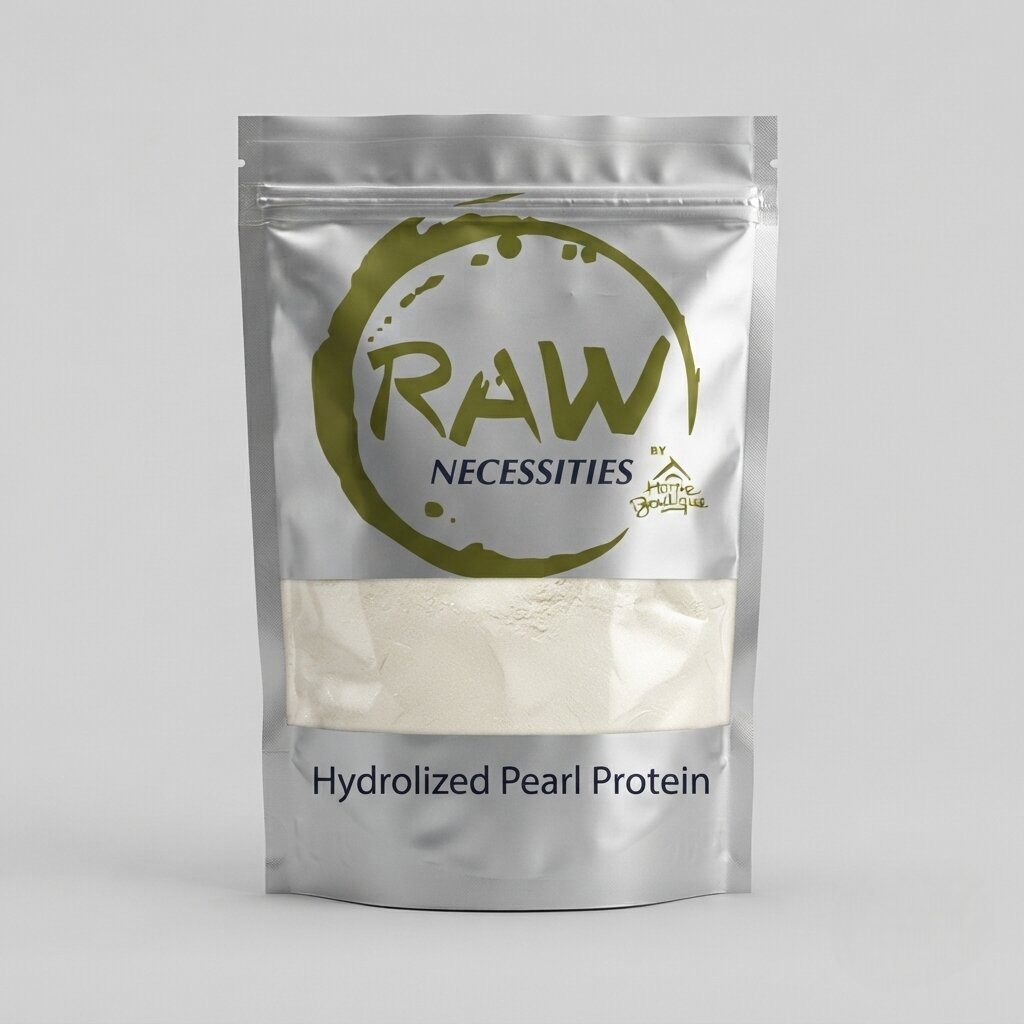
Hydrolized Pearl Protein is a pearl-derived cosmetic ingredient produced by processing and hydrolyzing pearl protein into smaller peptide fractions. It is used in premium personal-care formulations for its skin-conditioning, moisturizing, film-forming and sensory-enhancing properties.
Hydrolyzed Pearl Protein is particularly suited to facial care, body care, hair care and premium beauty formulations where a pearl-derived protein ingredient can complement moisturizing and conditioning systems.
Its protein-based composition can help provide a soft, smooth and conditioned skin feel and can also be incorporated into hair-care products to support conditioning and improved manageability.
INCI Name
Hydrolyzed Pearl
Common Names
- Hydrolized Pearl Protein
- Hydrolyzed Pearl Protein
- Hydrolyzed Pearl
- Pearl Protein
- Pearl Powder Hydrolysate
- Pearl Peptides
- Pearl Protein Peptides
- Hydrolyzed Pearl Peptides
- Pearl-Derived Protein
- Cosmetic Pearl Protein
Ingredient Type
- Skin Conditioning Agent
- Hair Conditioning Agent
- Moisturizing Ingredient
- Film-Forming Agent
- Protein-Based Cosmetic Ingredient
- Pearl-Derived Cosmetic Ingredient
Source
Hydrolyzed Pearl Protein is derived from natural pearl material, which is primarily composed of calcium carbonate and organic protein components.
The exact source, processing method and protein content vary by supplier and grade.
Physical Form
Depending on the commercial grade, Hydrolyzed Pearl Protein may be supplied as a:
- Fine white to off-white powder
- Light-colored powder
- Water-soluble or water-dispersible powder
Solubility
Solubility is grade dependent. Hydrolyzed pearl protein products are generally designed to be more readily incorporated into aqueous cosmetic formulations than untreated pearl material.
Always verify the supplier’s solubility specification before formulation.
Key Benefits
1. Skin Conditioning
Helps provide a soft, smooth and conditioned feel to the skin.
2. Moisture Support
Can complement humectants and moisturizing ingredients in hydration-focused cosmetic formulations.
3. Film-Forming Properties
Protein-derived fractions may contribute to a lightweight conditioning film on the skin or hair surface.
4. Smooth Skin Feel
Helps enhance the sensory profile of creams, serums, masks and other personal-care products.
5. Premium Pearl-Based Beauty Concept
Provides an attractive pearl-derived positioning for premium and luxury skincare formulations.
6. Hair Conditioning
Can be incorporated into shampoos, conditioners and hair masks to support softness and improved manageability.
7. Versatile Cosmetic Ingredient
Suitable for a broad range of leave-on and rinse-off cosmetic applications.
Applications
Skin Care
- Facial Serums
- Hydrating Serums
- Face Creams
- Moisturizing Creams
- Facial Lotions
- Gel Creams
- Face Masks
- Sheet Mask Formulations
- Overnight Masks
- Eye Care Products
- Body Lotions
- Body Creams
- Hand Creams
- Foot Care Products
- Premium Skin Care Formulations
Hair Care
- Shampoos
- Hair Conditioners
- Hair Masks
- Hair Treatments
- Hair Creams
- Leave-In Conditioners
- Hair Serums
- Hair Smoothing Products
- Dry Hair Care Formulations
Personal Care
- Body Wash
- Shower Gel
- Liquid Soap
- Hand Wash
- Bath Products
- Moisturizing Cleansers
- Premium Personal Care Products
Recommended Usage
A general cosmetic starting range is approximately:
0.5–5%
The optimum usage level depends on the commercial grade, active protein content, hydrolysis level, solubility and formulation type.
Always follow the supplier’s TDS for the exact recommended dosage.
How to Use
- Weigh the required quantity accurately.
- Pre-disperse or dissolve the powder in a suitable portion of water according to the supplier’s instructions.
- Mix thoroughly until uniformly incorporated.
- Add to the main formulation.
- Avoid unnecessary prolonged heating.
- Check final pH, viscosity, colour and stability.
- Complete the formulation and conduct appropriate stability testing.
Formulation Considerations
- Pre-dispersion may help prevent lump formation.
- Use adequate mixing during incorporation.
- Follow the supplier’s recommended processing temperature.
- Evaluate the final pH for protein stability.
- Check compatibility with preservatives and surfactants.
- Evaluate colour and odour contribution to the finished product.
- Conduct stability and compatibility testing before commercial production.
Compatibility
Hydrolyzed Pearl Protein can be incorporated alongside commonly used cosmetic ingredients such as:
- Glycerin
- Propanediol
- Panthenol
- Hyaluronic Acid
- Sodium PCA
- Betaine
- Aloe Vera
- Niacinamide
- Amino Acids
- Botanical Extracts
- Peptides
- Ceramides
- Hydrolyzed Collagen
- Hydrolyzed Marine Collagen
- Hydrolyzed Egg Protein
- Hydrolyzed Silk Protein
- Hydrolyzed Keratin
Technical Information
| Property | Information |
|---|---|
| Product Name | Hydrolized Pearl Protein |
| Standard Technical Name | Hydrolyzed Pearl Protein |
| Typical INCI | Hydrolyzed Pearl* |
| Ingredient Type | Pearl-Derived Protein Ingredient |
| Primary Function | Skin & Hair Conditioning |
| Secondary Functions | Moisturizing & Film Forming |
| Source | Pearl-derived |
| Physical Form | Fine white to off-white powder, grade dependent |
| Solubility | Grade dependent; generally water dispersible/soluble |
| Recommended Usage | Approx. 0.5–5%, grade dependent |
| Applications | Skin Care, Hair Care & Personal Care |
| Suitable Products | Serums, Creams, Lotions, Masks, Shampoos, Conditioners |
| Formulation Type | Leave-On & Rinse-Off |
Why Choose Hydrolized Pearl Protein?
- Premium pearl-derived cosmetic ingredient
- Suitable for luxury skincare concepts
- Helps provide conditioned skin feel
- Supports moisturizing formulations
- Useful for film-forming cosmetic systems
- Suitable for hair-conditioning applications
- Works in both leave-on and rinse-off products
- Suitable for facial, body and hair care
- Complements modern protein-based formulations
- Excellent choice for premium beauty products
Storage
Store in a cool, dry place in a tightly sealed container.
Protect from:
- Moisture
- Humidity
- Direct sunlight
- Excessive heat
- Contamination
Reviews
There are no reviews yet.