
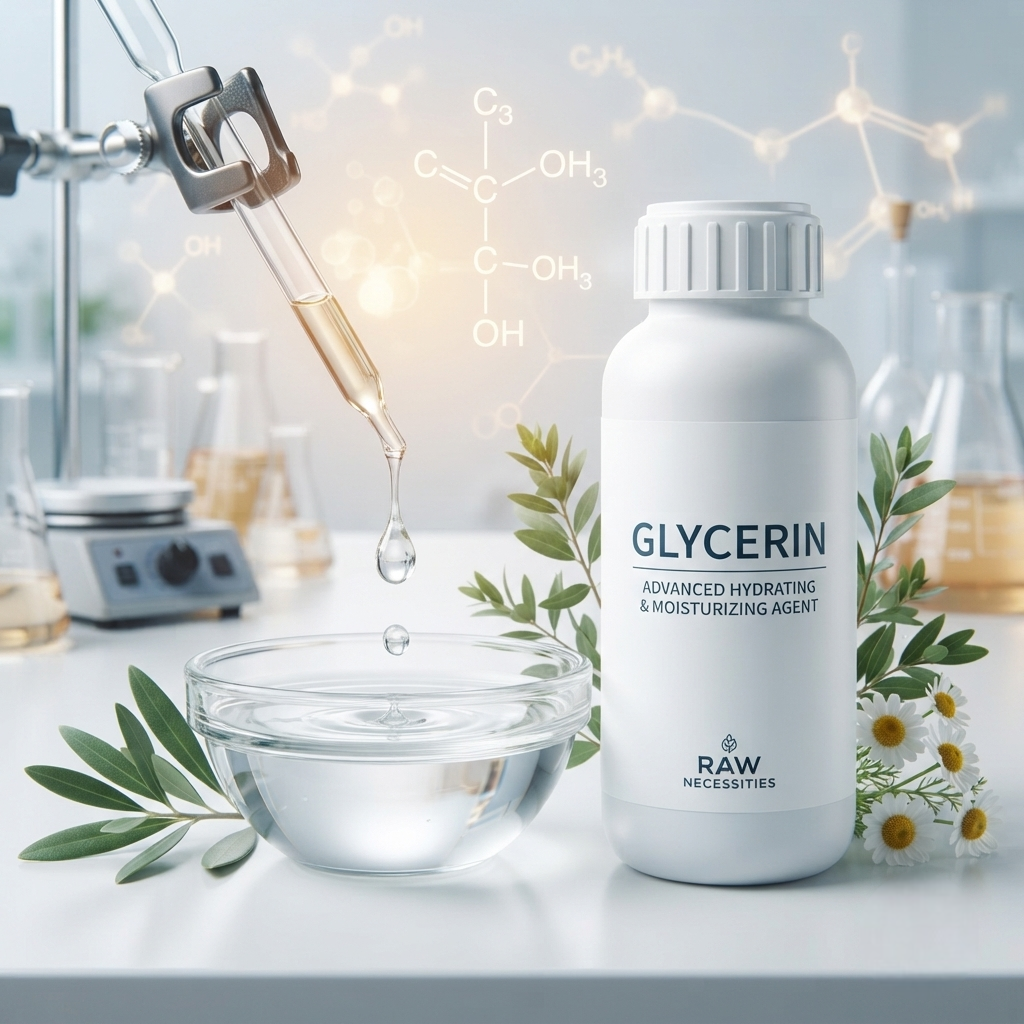
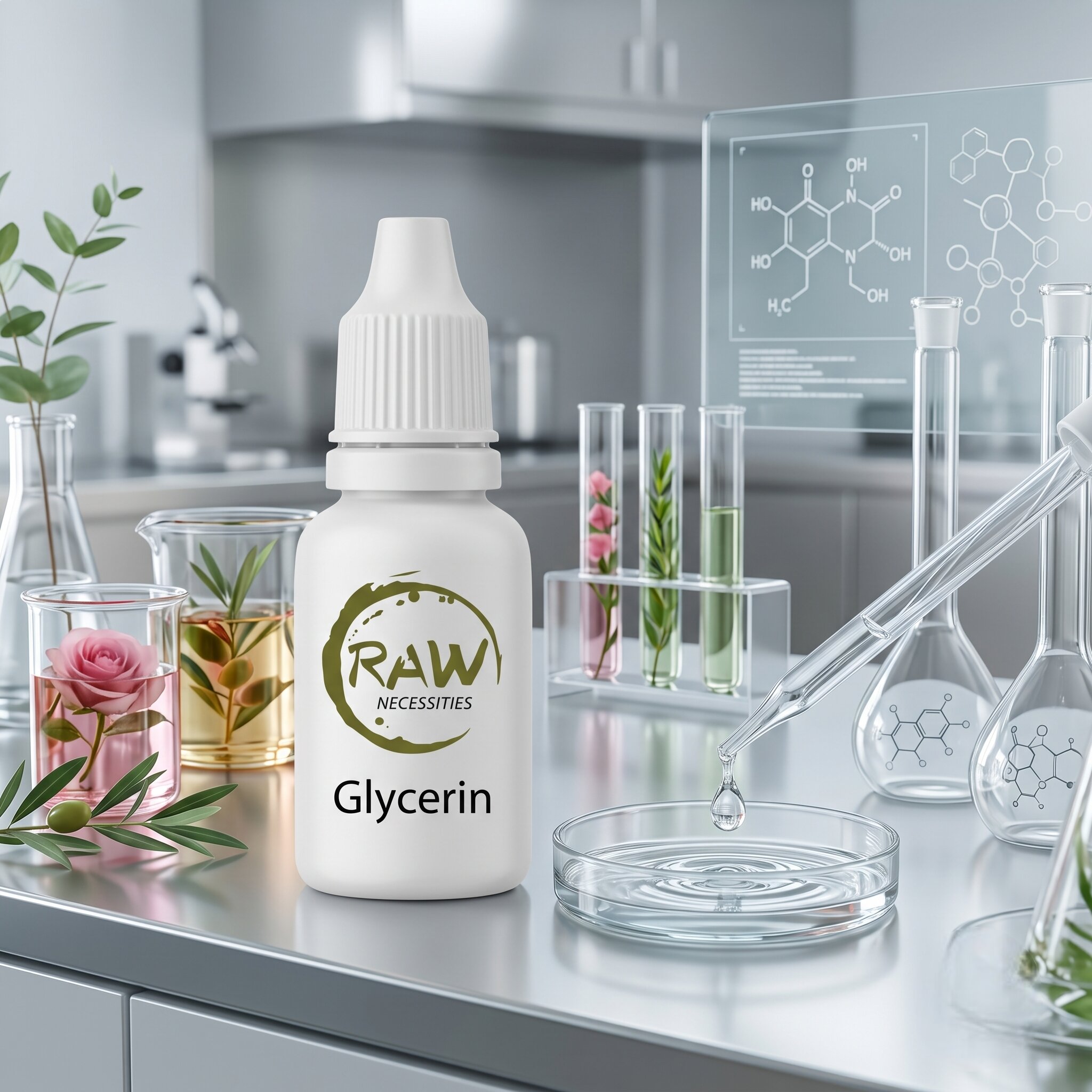
Glycerin, also known as Glycerol or Glycerine, is a versatile, highly functional cosmetic ingredient widely used in skincare, haircare, cleansing and personal-care formulations.
It is primarily valued for its excellent humectant properties, helping formulations attract and retain moisture. Glycerin can contribute to a soft, smooth and moisturized skin feel and is therefore one of the most widely used ingredients in modern cosmetic formulations.
Glycerin is also used as a solvent, formulation aid and skin-conditioning ingredient, making it suitable for a broad range of products including creams, lotions, serums, face washes, shampoos, conditioners, body washes, soaps and masks.
For professional formulation, the appropriate grade—such as cosmetic, USP or other applicable specification—should be selected according to the intended application and verified through the supplier’s current TDS, COA and SDS.
INCI Name
Glycerin
Common Names
- Glycerin
- Glycerine
- Glycerol
- 1,2,3-Propanetriol
- Propane-1,2,3-triol
- Vegetable Glycerin*
- USP Glycerin*
Chemical Information
| Parameter | Details |
|---|---|
| Product Name | Glycerin |
| INCI Name | Glycerin |
| Chemical Name | Glycerol / 1,2,3-Propanetriol |
| CAS Number | 56-81-5 |
| EC Number | 200-289-5 |
| Molecular Formula | C₃H₈O₃ |
| Molecular Weight | 92.09 g/mol |
| Ingredient Type | Cosmetic Functional Ingredient |
| Functional Class | Humectant / Solvent / Skin Conditioning |
| Physical Form | Clear, colorless, viscous liquid |
| Odor | Typically low to practically odorless, grade dependent |
| Water Solubility | Highly soluble / miscible with water |
| Main Applications | Skin Care, Hair Care, Cleansing & Personal Care |
What is Glycerin?
Glycerin is a three-hydroxyl-group alcohol (polyol) with strong affinity for water. In cosmetic formulations, its primary role is to function as a humectant, helping attract and retain moisture within the formulation and contributing to the moisturized feel of finished products.
Key Benefits & Functions
1. Powerful Humectant
Glycerin helps attract and retain water, making it an important ingredient for moisturizing and hydration-focused cosmetic formulations.
2. Moisturizing Support
It helps improve the moisturized feel of the skin and can contribute to a softer, smoother skin surface.
3. Skin Conditioning
Glycerin supports a pleasant skin feel and is commonly incorporated into creams, lotions, serums and other conditioning products.
4. Excellent Formulation Versatility
It can be incorporated into a wide range of cosmetic systems, from simple aqueous products to complex creams and cleansing formulations.
5. Useful Solvent
Glycerin can act as a solvent or co-solvent for selected cosmetic ingredients and formulation components.
6. Helps Reduce Dry Feel
In cleansing and personal-care formulations, glycerin can help create a more comfortable skin feel compared with formulations that may otherwise feel excessively drying.
7. Suitable for Hydration-Focused Products
Its strong humectant functionality makes it particularly useful in products positioned around moisturization and hydration.
Cosmetic Applications
Skin Care
- Face Serums
- Hydrating Serums
- Moisturizers
- Face Creams
- Face Lotions
- Hydrating Creams
- Body Lotions
- Body Creams
- Hand Creams
- Facial Masks
- Gel Creams
- Hydrating Toners
- Facial Mists
- After-Sun Cosmetic Products
Cleansing & Bath
- Face Wash
- Facial Cleansers
- Body Wash
- Shower Gel
- Hand Wash
- Liquid Soap
- Bar Soap
- Bath Products
- Cleansing Creams
- Micellar-Type Formulations
Hair Care
- Shampoos
- Conditioners
- Hair Masks
- Hair Creams
- Leave-In Conditioners
- Hair Serums
- Scalp-Care Formulations
- Moisturizing Hair Products
Personal Care
- Deodorant Formulations
- Shaving Products
- After-Shave Products
- Hand Care
- Foot Care
- Baby-Care Formulations
- Moisturizing Personal-Care Products
Suitable Product Types
- Hydrating Face Serum
- Moisturizing Face Cream
- Hydrating Lotion
- Body Lotion
- Body Cream
- Face Wash
- Facial Cleanser
- Body Wash
- Shower Gel
- Liquid Soap
- Shampoo
- Conditioner
- Hair Mask
- Hair Serum
- Hand Cream
- Foot Cream
- Facial Mask
- Bath Products
- Personal Care Products
Recommended Usage
The appropriate concentration of Glycerin depends on the product type, desired sensory profile and overall formulation.
General Cosmetic Formulation Range
Approximately 1–10%
Higher concentrations may be used in certain specialized formulations, but excessive Glycerin can affect tackiness, viscosity and sensory feel.
For commercial product development, the final concentration should be determined through formulation testing and according to the specific raw-material grade and supplier recommendations.
How to Use Glycerin
Glycerin is generally incorporated into the water phase of a cosmetic formulation.
General Formulation Procedure
- Measure the required quantity of Glycerin according to the formulation.
- Add it to the aqueous phase.
- Mix thoroughly until uniform.
- Add other water-soluble ingredients as required.
- Continue with the selected manufacturing process.
- Adjust the final pH according to the product requirements.
- Evaluate viscosity, appearance, stability and sensory properties.
- Complete appropriate preservative and compatibility testing.
Formulation Considerations
When using Glycerin, formulators should consider:
- Desired moisturizing performance
- Final product viscosity
- Skin feel
- Tackiness at higher concentrations
- Compatibility with other humectants
- Preservation system
- Final pH
- Packaging
- Product stability
- Overall sensory profile
Glycerin can be combined with other commonly used humectants such as:
- Propanediol
- Butylene Glycol
- Pentylene Glycol
- Sorbitol
- Sodium PCA
- Hyaluronic Acid
- Betaine
- Panthenol
Glycerin in Skin Care
Glycerin is particularly useful in moisturizing and hydration-focused skincare because its humectant functionality helps support water retention.
It can be used in:
Serums → Creams → Lotions → Cleansers → Masks → Body Care → Hand Care
Glycerin in Hair Care
Glycerin is commonly used in hair-care products where moisture and conditioning are desired.
It can be incorporated into:
- Moisturizing Shampoos
- Conditioners
- Hair Masks
- Leave-In Conditioners
- Hair Creams
- Hair Serums
- Curl-Care Products
- Scalp-Care Formulations
Product Information
| Parameter | Details |
|---|---|
| Product Name | Glycerin |
| INCI Name | Glycerin |
| Chemical Name | Glycerol |
| CAS No. | 56-81-5 |
| Formula | C₃H₈O₃ |
| Molecular Weight | 92.09 g/mol |
| Physical Form | Clear, viscous liquid |
| Functional Category | Humectant |
| Secondary Function | Solvent / Skin Conditioning |
| Water Compatibility | Excellent |
| Main Application | Cosmetics & Personal Care |
| Recommended Starting Range | Approx. 1–10% |
| Formulation Phase | Generally Water Phase |
Why Choose Glycerin?
- Highly versatile cosmetic ingredient
- Excellent humectant functionality
- Supports moisturized skin feel
- Suitable for skin and hair-care products
- Useful in both leave-on and rinse-off formulations
- Excellent compatibility with water-based systems
- Suitable for creams, lotions, serums and cleansers
- Useful in shampoos and conditioners
- Can function as a solvent and formulation aid
- Suitable for professional cosmetic formulation
- Widely applicable across personal-care categories
Storage
Store Glycerin in a cool, dry and clean environment in a tightly closed container.
Protect from:
- Excessive heat
- Direct sunlight
- Moisture contamination
- Dust and foreign materials
- Unnecessary exposure to air
Reviews
There are no reviews yet.