
Product Overview
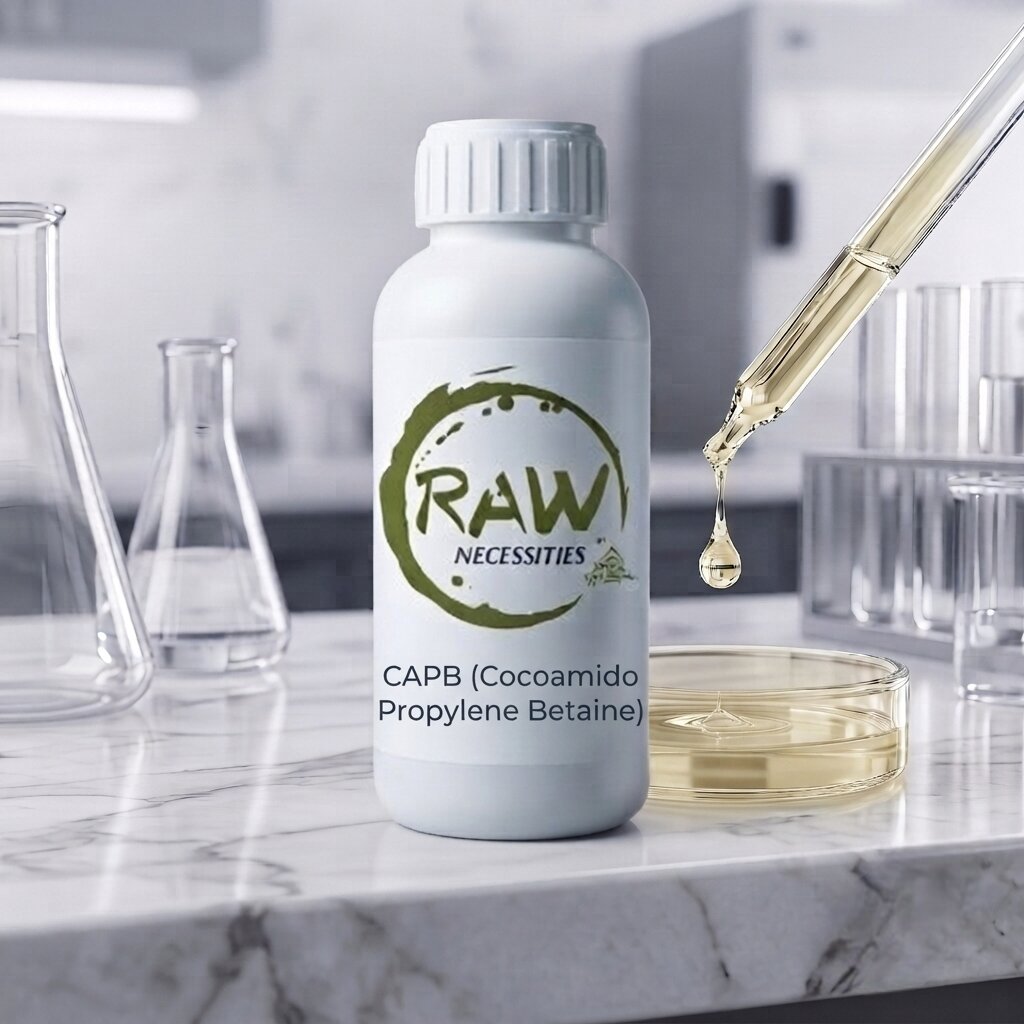
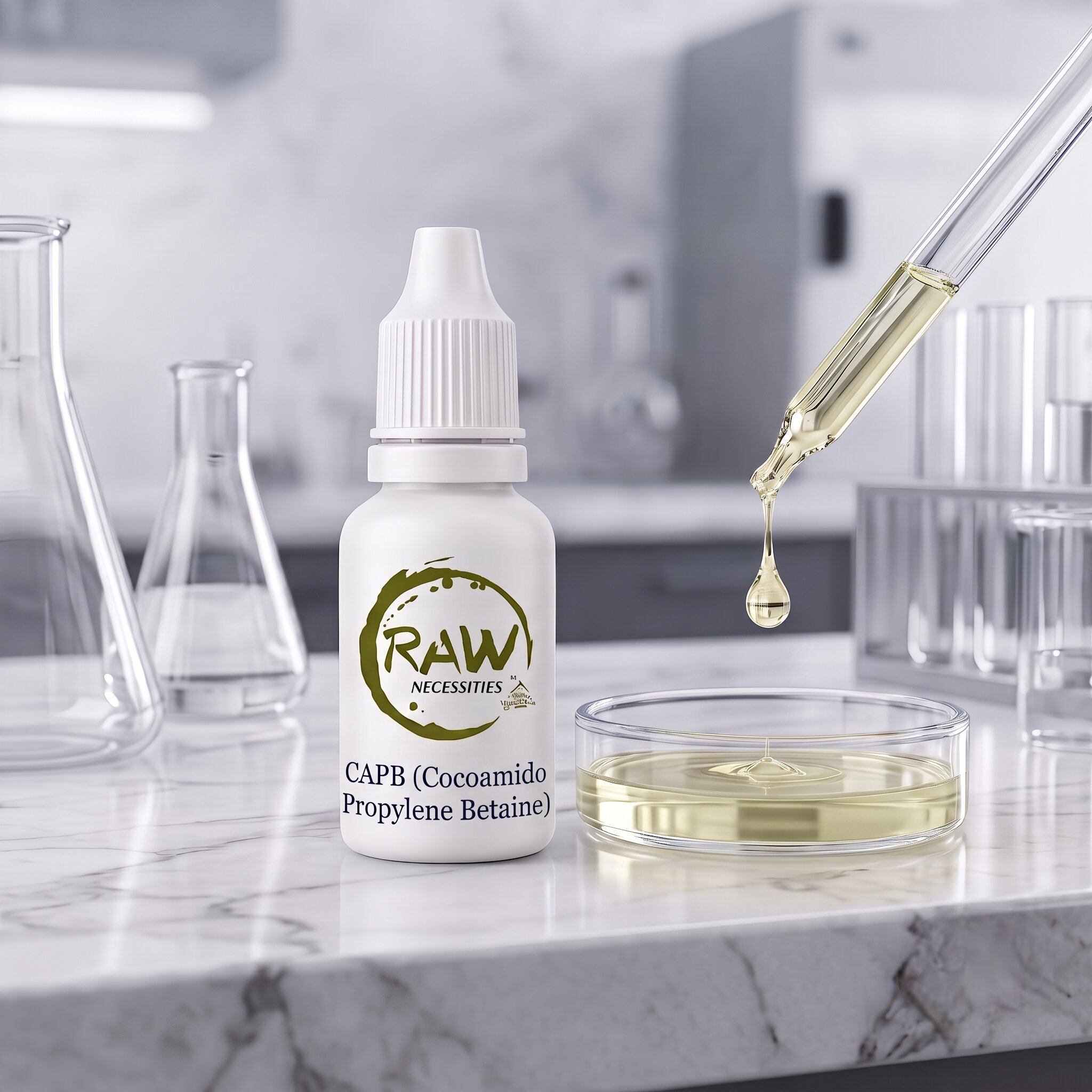
Cocamidopropyl Betaine (CAPB) is a coconut-derived surfactant commonly used in skincare and hair-care cleansing products. It is primarily used as a cleansing surfactant and foam booster, and can also function as a skin/hair conditioning ingredient and viscosity-increasing agent.
CAPB is particularly useful when formulating products where you want good cleansing and foam with a milder surfactant system.
INCI Name
Cocamidopropyl Betaine
Common Names
- Cocamidopropyl Betaine
- CAPB
- Cocoamidopropyl Betaine
- Cocamidopropyl Dimethyl Glycine
- Cocoyl Amide Propyl Betaine
- Cocoyl Amide Propyl Dimethyl Glycine
CAS Number
61789-40-0
EC / EINECS Number
263-058-8
Chemical Type
Amphoteric / Zwitterionic Surfactant
Origin
CAPB is generally manufactured from fatty acids derived from coconut oil and related raw materials.
⭐ Main Functions
CAPB can perform several functions in cosmetic formulations:
- Cleansing Agent
- Surfactant
- Foam Booster
- Skin Conditioning Agent
- Hair Conditioning Agent
- Viscosity-Increasing Agent
- Mildness-supporting co-surfactant
💧 Key Benefits
1. Mild Cleansing
Helps remove dirt, excess oil, sweat and impurities from skin and hair.
2. Foam Enhancement
Helps produce and stabilize a rich, creamy foam in cleansing formulations.
3. Helps Improve Mildness
CAPB is commonly used alongside other surfactants to create a milder overall cleansing system.
4. Suitable for Skin & Hair Cleansing
Useful for both skin-care and hair-care rinse-off formulations.
5. Supports Product Texture
Depending on the formulation system, CAPB can contribute to viscosity and product consistency.
🧴 Skincare Applications
CAPB can be used in:
- Face Wash
- Facial Cleanser
- Foaming Face Wash
- Body Wash
- Shower Gel
- Hand Wash
- Liquid Soap
- Cleansing Gel
- Bath Products
- Makeup Cleansers
- Gentle Cleansing Formulations
💇 Hair-Care Applications
- Shampoo
- Mild Shampoo
- Daily-use Shampoo
- Baby Shampoo
- Scalp Cleansing Products
- Conditioner Formulations
- 2-in-1 Shampoo
- Hair Cleansing Products
CAPB is widely used in shampoos, conditioners and other personal-care cleansing products.
🧪 How CAPB Works
CAPB is a zwitterionic/amphoteric surfactant. In a cleansing formulation, it helps surfactant molecules interact with oil, dirt and impurities, allowing them to be dispersed and rinsed away with water.
It is also commonly combined with other surfactants to balance cleansing, foam and mildness.
Simple Explanation
CAPB + Water + Surfactant System → Foam + Cleansing + Easier Rinsing
🤝 Commonly Used With
CAPB is frequently combined with other surfactants such as:
- SLES
- AOS
- Sodium Lauroyl Sarcosinate
- Sodium Cocoyl Isethionate
- Decyl Glucoside
- Coco Glucoside
- Other amphoteric surfactants
For example, CAPB + AOS can be used as part of a cleansing/foaming surfactant system.
📊 Recommended Usage
CAPB dosage depends heavily on the commercial grade and active matter.
Commercial CAPB is commonly supplied as an aqueous solution, often around 30% active matter, but exact specifications vary by supplier.
Published safety assessment data report cosmetic use concentrations up to 30%, including rinse-off applications, while older CIR guidance placed lower limits for certain leave-on uses. The appropriate level for your product should therefore be determined from the specific grade’s TDS and the finished formulation’s safety assessment, rather than using one universal dosage.
Website Recommendation
Recommended Usage:
Use according to the supplier’s TDS and the active matter of the specific CAPB grade.
This wording is better for your website than giving one fixed percentage.
⚗️ Physical & Technical Information
| Property | Details |
|---|---|
| Product Name | Cocamidopropyl Betaine |
| Abbreviation | CAPB |
| INCI | Cocamidopropyl Betaine |
| CAS No. | 61789-40-0 |
| EC No. | 263-058-8 |
| Type | Amphoteric / Zwitterionic Surfactant |
| Main Function | Cleansing & Foaming |
| Secondary Functions | Conditioning & Viscosity Support |
| Solubility | Water Soluble |
| Physical Form | Usually Liquid / Aqueous Solution |
| Colour | Grade dependent |
| Active Matter | Grade dependent |
| pH | Grade dependent |
Important: CAPB specifications such as active matter, sodium chloride, pH, colour, viscosity and density can vary considerably by supplier and grade. For the actual product page, use your supplier’s TDS/COA.
🧴 Best Product Applications
⭐ Highly Suitable
Face Wash • Body Wash • Shampoo • Shower Gel • Hand Wash • Facial Cleanser
Suitable
Liquid Soap • Foaming Cleanser • Bath Products • Hair Cleansing Products
Not primarily intended as
Face Serum • Facial Oil • Moisturizer • Skin Treatment Serum
CAPB’s main role is surfactant/cleansing, rather than acting as a specialized moisturizing or treatment active.
⚠️ Safety Information
CAPB has a long history of cosmetic use and has been evaluated by the Cosmetic Ingredient Review (CIR). CIR concluded that CAPB and related amidopropyl betaines are safe when formulated to be non-sensitizing.
However, safety assessments also note that skin/eye irritation and sensitization can occur, with particular attention to impurities such as DMAPA and amidoamine. Good-quality raw material with controlled impurity levels is therefore important.
Website Safety Disclaimer
For cosmetic formulation use only. Do not apply concentrated raw material directly to the skin. Use according to the supplier’s TDS/SDS and applicable cosmetic formulation guidelines. Avoid contact with eyes.



Reviews
There are no reviews yet.